

















Understanding Fragrance Notes Top, Middle & Base Notes Explained
Ever read a fragrance description and wonder what top, middle, and base notes actually mean?
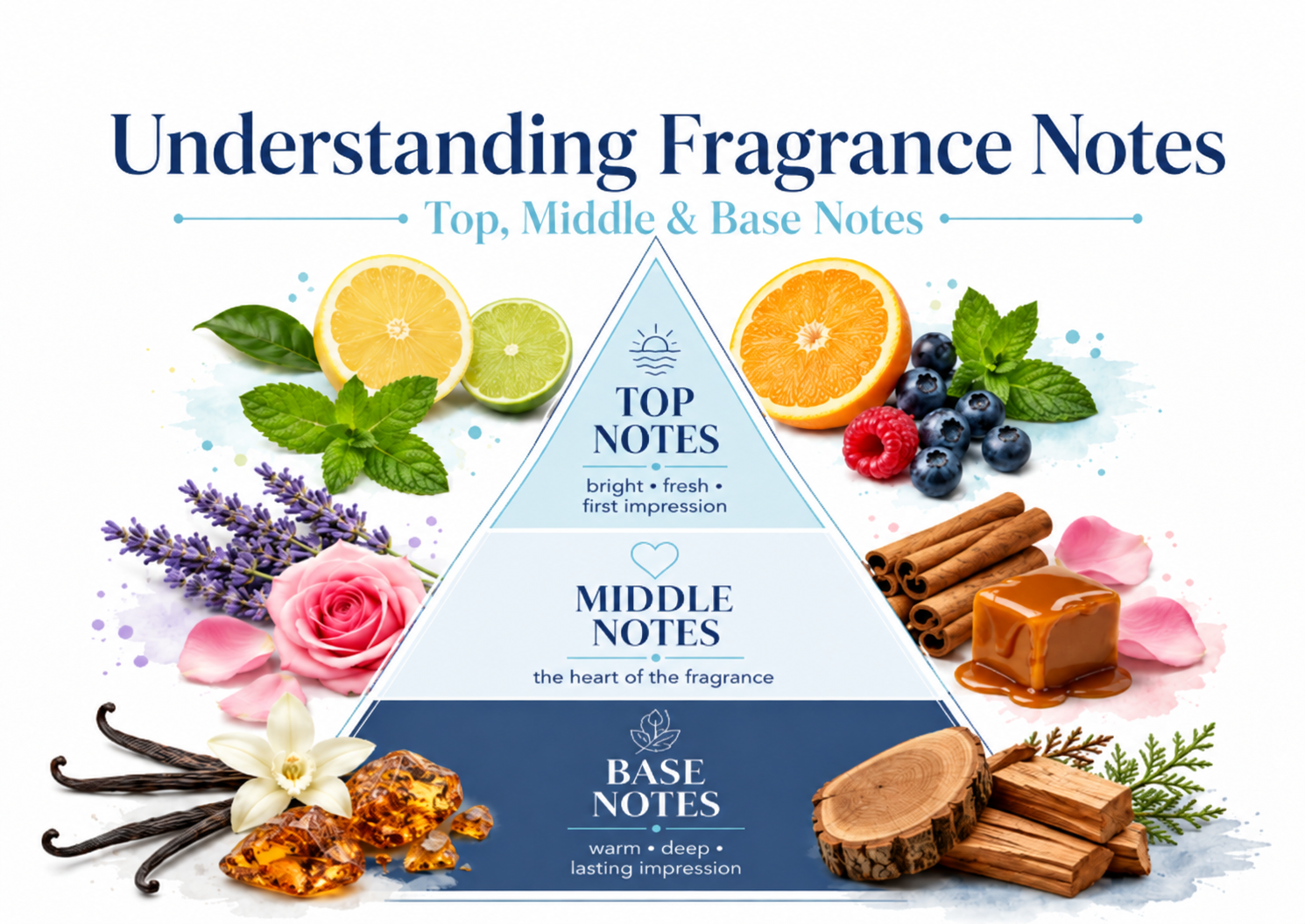
These three layers make up what’s known as the fragrance triangle and help describe how a scent develops and comes together.
Top Notes: The First Impression
Top notes are usually what you notice first. They tend to be lighter, brighter, and more noticeable right away.
Common top notes include:
- Citrus
- Berries
- Apple
- Pear
- Mint
- Fresh herbs
Think of top notes as the fragrance’s introduction.
Middle Notes: The Heart
Middle notes, also called heart notes, give a fragrance much of its overall personality. They begin to stand out as the top notes soften and help connect the lighter opening to the deeper base.
Common middle notes include:
- Florals
- Cinnamon
- Clove
- Coconut
- Caramel
- Honey
Think of middle notes as the main story of the fragrance.
Base Notes: The Lasting Impression
Base notes are usually deeper, warmer, and longer-lasting. They help anchor the fragrance and give it richness and depth.
Common base notes include:
- Vanilla
- Amber
- Musk
- Sandalwood
- Cedarwood
- Patchouli
Think of base notes as the fragrance’s foundation.
The Fragrance Triangle
Although we describe fragrances in layers, the notes don’t appear one at a time. They often overlap and blend together throughout the scent.
That’s why two fragrances with similar notes can still smell completely different.
Why Do Fragrance Notes Matter?
Fragrance notes give you a better idea of what to expect from a scent and can help you recognize the types of fragrances you naturally enjoy.
For example, if you love cozy gourmand scents, you may find yourself drawn to notes like vanilla, caramel, cream, maple, and warm spices. If you prefer fresh fragrances, citrus, green notes, rain, herbs, or aquatic notes may be more your style.
And remember—how a fragrance smells from the bottle may differ from how it smells in your finished candle, soap, or body product.
That’s why we always recommend testing fragrance oils in your own formulations.
The fragrance notes tell you the story. Your nose gets the final vote.